
Bench Warrants in Norman County
In Norman County, a bench warrant is a judge's order to bring a person before the court, and in Minnesota it most often follows a failure to appear. The triggers are plain. Missing a scheduled appearance tops the list, along with ignoring a summons or citation, or allegedly breaking a condition of release. People say "bench warrant" in conversation, but the official paperwork uses a plainer label: warrant for failure to appear. The difference is wording, not effect. Either way, a judge who has reviewed the case signs the order, and the fix runs through the issuing court. That is where a reader with a Norman County warrant question should start.
Norman County Failure-to-Appear Bench Warrant Form
Most Norman County warrants after a missed date trace back to Form 8, the application and warrant used to obtain a defendant's appearance after a failure to respond to a summons or citation. The state's criminal procedure rules publish it. Courts across Minnesota use it, including the district court in Ada.
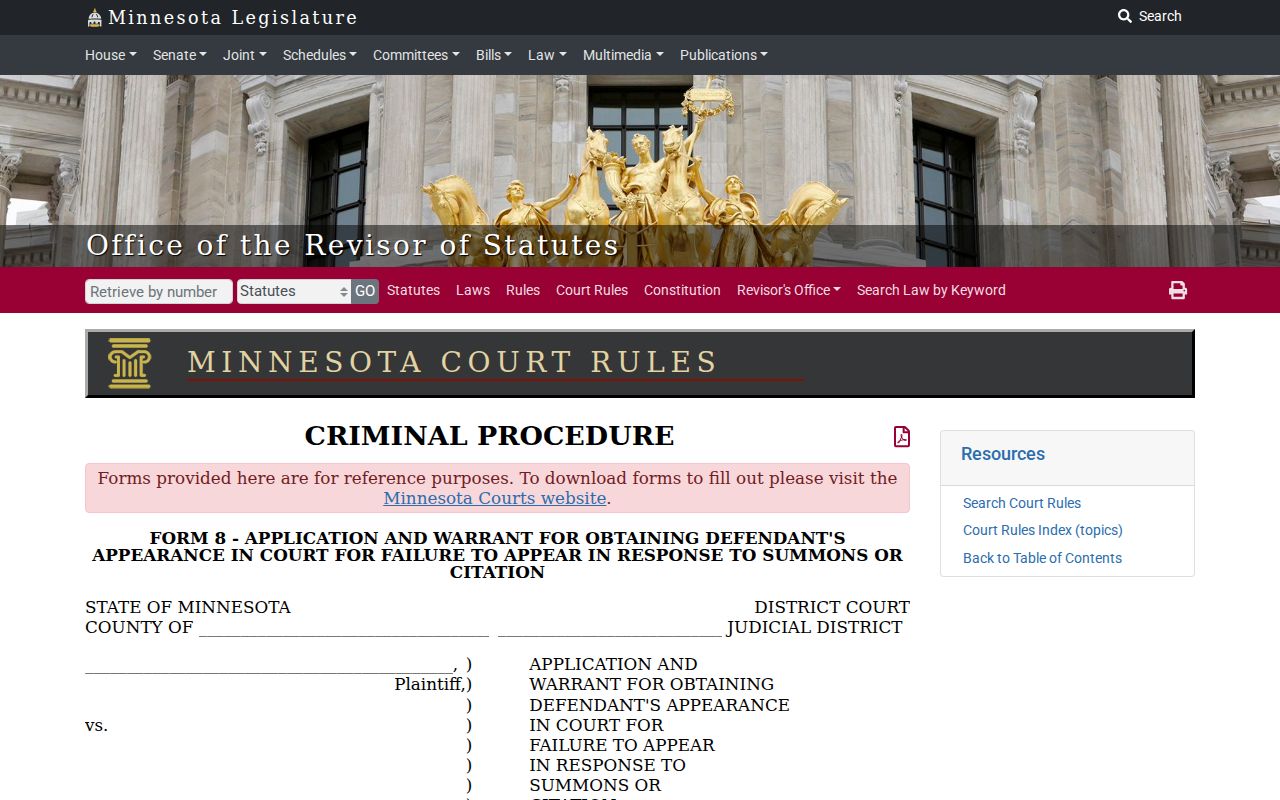
The Form 8 warrant lists the county and district, the parties, the missed obligation, the issuing agency, and the prosecutor's signature. Naming the form helps when you call the Norman County court for an explanation.
How a Bench Warrant Is Issued
Issuance starts with a no-show. The case was set for an appearance, and the person did not respond, so a prosecutor applies for a warrant and a judge reviews the case before signing. Rule 3 permits a summons instead in many situations. A Norman County warrant is expected only when the facts justify one.
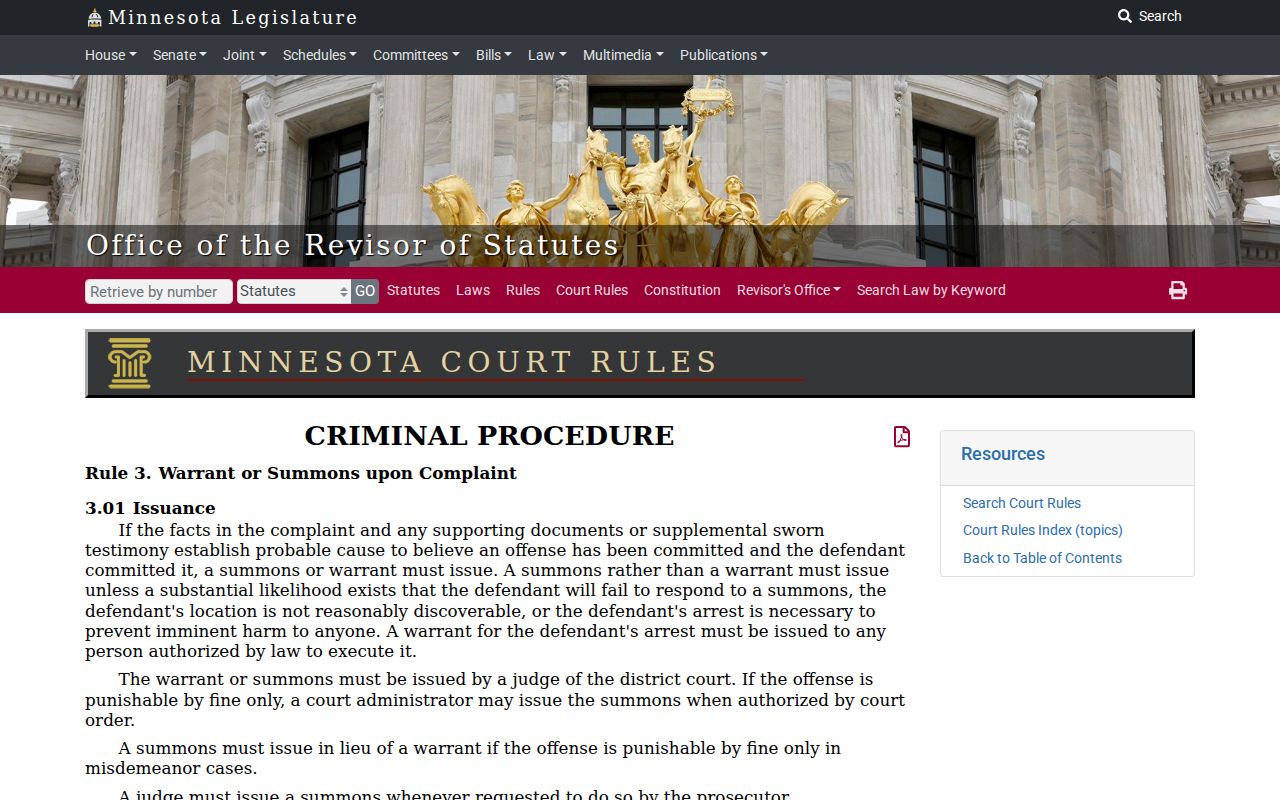
Rule 3 spells out what the warrant must contain and how an officer executes it. The judge's order controls the case in Norman County. Its conditions and bail are the ones that apply.
Note: A missed date does not automatically create a warrant, because the judge decides whether to issue one after reviewing the case.
Norman County Bench Warrants Are Not Capias
Some readers bring vocabulary from other states. In Texas and elsewhere, a fine-collection writ goes by capias or capias pro fine and runs through a lower court. Minnesota's current rules and forms use neither the system nor the label. The words that matter in Norman County are warrant, bench warrant, warrant for failure to appear, and release-condition warrant. Copy the exact phrase from the case record instead of translating it. The phrase points to the rule and the remedy that govern the situation, so precision here saves a call.
Bench Warrant vs Arrest Warrant
The two orders look alike on paper and act differently in practice. A bench warrant enforces a court obligation. An arrest warrant answers a criminal charge. In Norman County, both can lead to an arrest, so neither label is a reason to sit still.
| Point | Bench or Failure-to-Appear Warrant | Arrest Warrant |
|---|---|---|
| What triggers it | A missed appearance or an unanswered summons or citation | Probable cause that an offense occurred |
| What starts the paperwork | A prosecutor's application after the missed obligation | A complaint, supporting documents, or sworn testimony |
| What the judge weighs | Whether the person will respond to a summons instead | Whether probable cause is established and a warrant is needed |
| Typical result | An appearance is required, often with bail or conditions | The person is taken into custody and brought before a judge |
A bench warrant still carries arrest authority under Rule 3.03. The gentler-sounding name changes nothing about how a Norman County officer executes it.
Norman County Release-Condition and Contempt Warrants
Three labels show up in Norman County case files when a court obligation goes unmet, and they do not mean the same thing. Each points to a different piece of the case history.
- Failure to appear (FTA)
- Missing a required appearance or not answering a summons or citation.
- Warrant for failure to appear
- The Form 8 process used to obtain an appearance after a missed obligation.
- Release-condition warrant
- A Form 10 application alleging that conditions set after release were broken.
- Contempt
- A court's response to a failure to comply with an order, when the case allows it.
Rule 6.03 covers a summons or warrant when someone is alleged to have violated release conditions. Unsure which label fits? Read the case events and ask Court Administration to confirm the Norman County entry.
How to Resolve a Norman County Bench Warrant
Clearing the warrant and finishing the case are separate jobs in Norman County. The warrant leaves the record when the court recalls it, when the person appears, or when the court sets new terms. The charge itself waits. It stays on the case until it is resolved on its own.
- Find the case with the number, or search MCRO by name and date of birth with the Norman County location selected.
- Call Court Administration and ask whether the warrant is active and whether the judge wants a motion, an appearance, or a payment.
- Ask whether the court will accept a motion to recall or quash, and who needs notice of it.
- Call the Sheriff's Office before any surrender to learn where to report, what hours apply, and how bond works.
- Keep the order, receipt, or new date in writing, then confirm that the case record shows the change.
Careful: A filed motion is not a signed recall, and a payment is not proof of clearance. Ask the court what the case record shows.
Missing a Norman County Court Date
Most people who miss a Norman County court date do not mean to, and the first call counts more than the first excuse. Court Administration can say whether the case is still open, whether a warrant was issued, and what the judge expects next. Calling before an officer contacts you is almost always the better order of events. If the case is a traffic or petty offense, ask how a payment would affect the record before sending money. A payment can settle a fine while leaving the failure-to-appear event untouched, and the court is the only office that can confirm what changed. When the charge is more serious, an attorney can handle that conversation for you.
Which Norman County Court Issued It
Nearly every local bench warrant comes from one place, because Minnesota runs a unified district court. Norman County District Court hears the county's criminal, traffic, family, and juvenile cases. Its judges issue the warrants that follow a missed obligation.
Norman County District Court
Court Administration, 16 3rd Avenue E
Ada, MN 56510
218-415-7090
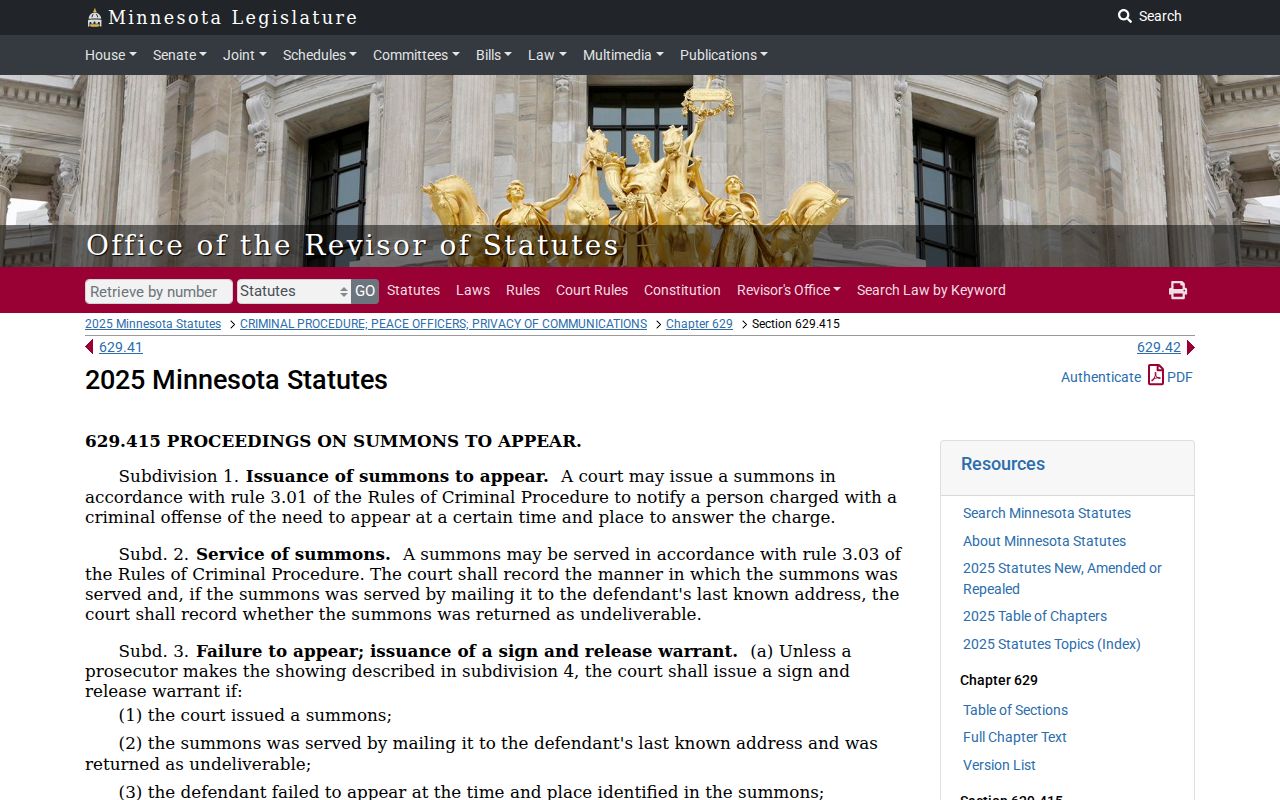
The state also offers a narrow break for a first failure to appear. The sign-and-release provision limits arrest authority in that one situation. It applies in Norman County only when the statute's conditions are met.
Ada's old charter once sketched a municipal court for ordinance cases. That paper is history now. Norman County has no operating city court, so a bench warrant here comes from the county bench, not from any village tribunal.
Norman County Bench Warrants: Judge and Sheriff
Each office in Norman County plays one part. The judge decides whether a bench warrant is needed and what it commands. Court Administration keeps the file and fields record questions. The sheriff and other authorized officers then execute the order, and they must tell the person about the warrant and the charge. That division is why a call to the wrong desk stalls. A sheriff's deputy cannot recall a warrant or change bail, and a clerk cannot say where you should report for booking. For how officers handle both process and citations, read the arrest and citation rule. Then call whichever Norman County office actually owns the piece you need.