
Arrest Warrants in Norman County
An arrest warrant is an order, not an accusation that anyone can argue with on the street. In Minnesota the process begins with probable cause. A prosecutor shows it through a complaint, supporting documents, or sworn testimony, and a judge decides from that material whether a warrant is needed at all. Courts prefer a summons in some situations and issue a warrant only when the case justifies one. Either way, the order directs an authorized officer to bring the person before the proper judge, and the case file records what happened. The public side of that file is searchable at MCRO. The Norman County District Court page adds the courthouse address, hours, and phone contact for anyone working a Norman County warrant question.
Norman County Arrest Warrants and Probable Cause
Probable cause is the gate. It means the facts support a reasonable belief that an offense occurred and that this person is connected to it. Minnesota Rule 3 sets out how those facts reach a Norman County judge before any warrant is signed.
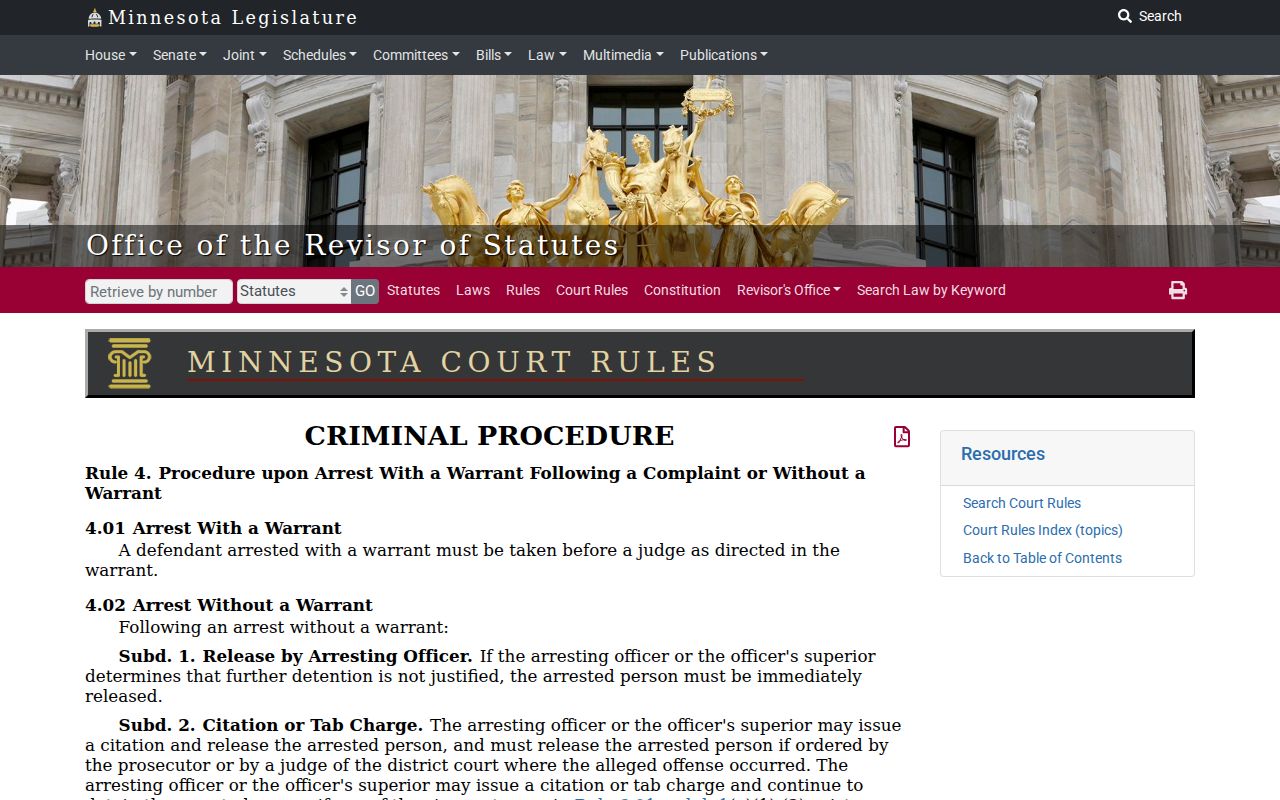
Rule 4 governs arrests. It covers arrests with a warrant, arrests without one, and the times a citation is the proper route instead. The arrest and citation rule is the companion to the issuance rule, and together they explain why a Norman County case may open with a ticket rather than a warrant.
What a Norman County Arrest Warrant Contains
Rule 3.02 fixes the contents. The warrant itself is a short document with specific required elements, and the fields below are the ones a reader meets on the form or in a Norman County case file.
| Case Number | District court file number, formatted like 49-CR-25-1234 |
|---|---|
| Person | Name and a description sufficient to identify the person |
| Offense | The charge and its classification |
| Bail and Conditions | Amount of bail and any conditions set by the judge |
| Direction to Officer | An order to arrest and bring the person before the proper judge |
| Issuing Authority | The judge's signature, title, and date |
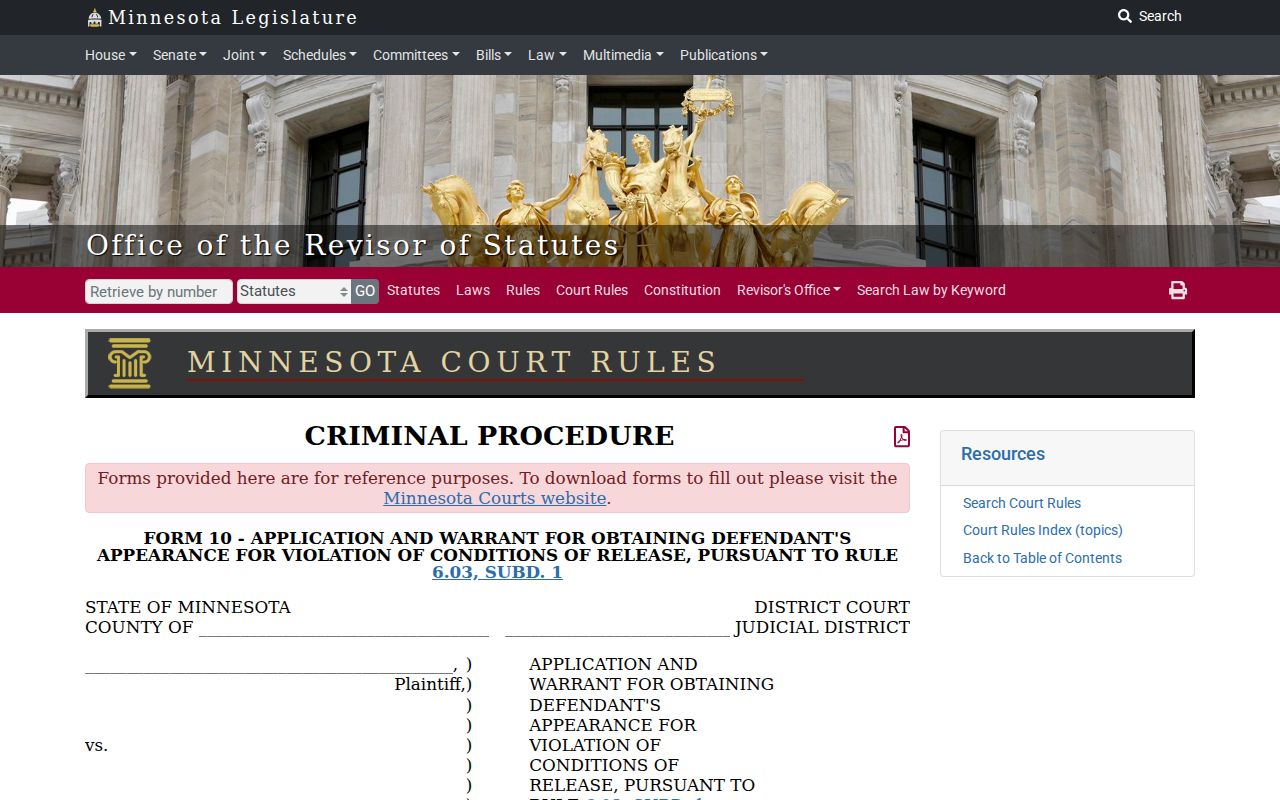
The Form 10 warrant is the official template used when an arrest follows an alleged release violation. It records the prior release and the alleged facts. It also lists the conditions and the bail the Norman County court set.
Rule 3.03: What Officers Must Tell You
The officer does not need the paper in hand. Rule 3.03 lets a warrant be executed anywhere in Minnesota, subject to limits on misdemeanor timing, and it requires the officer to tell the person about the warrant and the charge. So a person who is stopped should expect to hear what the warrant says. Nobody should wait for a traffic stop to learn the answer. The outcome is the same, and the setting is far worse. A call to the court costs nothing.
How Norman County Arrest Warrants Are Served
The sheriff is Norman County's law enforcement office, and it executes process across all 24 townships and eight cities. City police may execute their own department's process or county court orders as well. Record questions are different. Those go to Court Administration in Ada, not to the officer who serves the paper.
Norman County publishes no warrant service unit, no arrest list, and no walk-in hours. Anyone wanting to arrange a surrender has to call and ask how the office handles it. The website does not say.
Norman County Arrest Warrant Bail and Conditions
Minnesota Rule 6.02 starts from release without bail. That holds unless the court finds a risk of nonappearance or a danger to the public. Where money bail is required, the court must set an amount that can be met with cash or a surety, and it may add conditions of release on top.
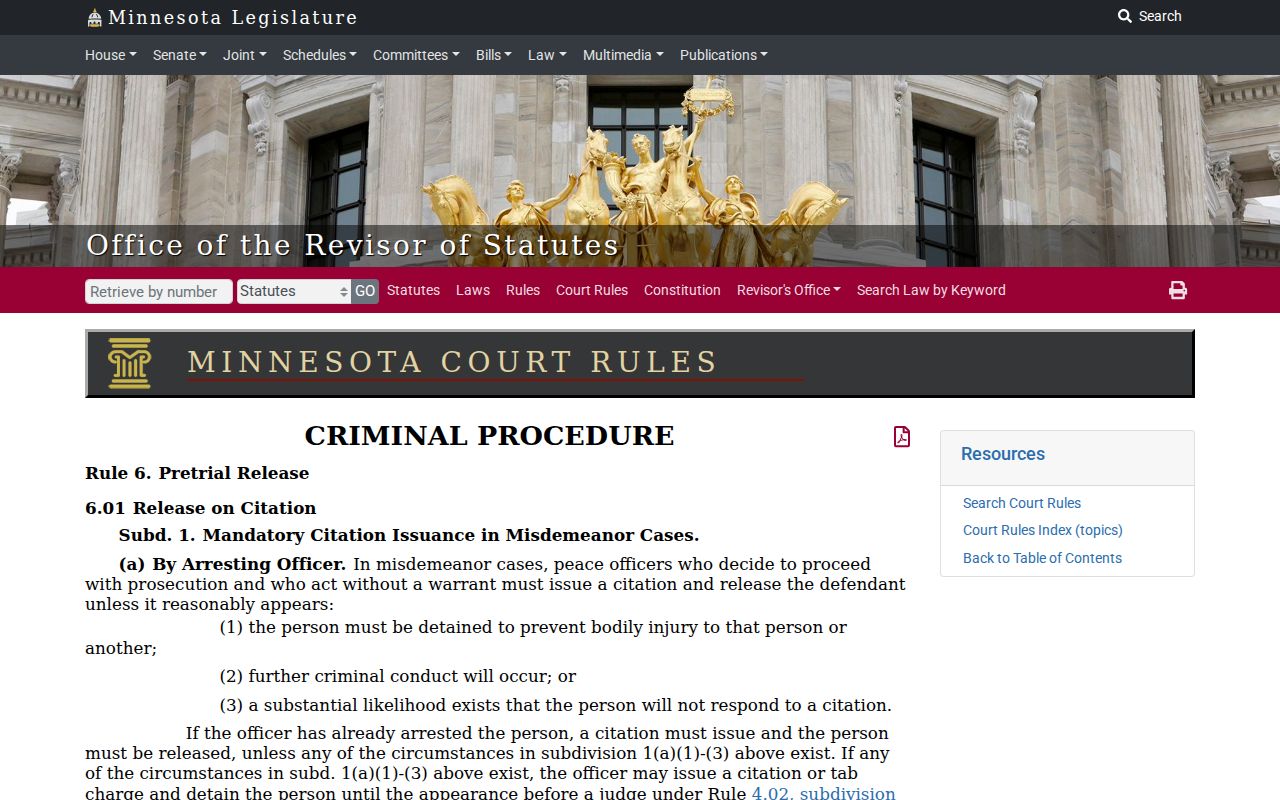
The release rule explains what a judge may impose and how a release-condition violation is handled. No countywide bond schedule exists in Norman County, so the warrant itself carries the number that applies.
Note: Bond is a security condition for appearance, not a fine, and it does not resolve the charge that produced the warrant.
Arrest Warrant vs Summons vs Bench Warrant
Three kinds of process exist. An arrest warrant, a summons, and a bench warrant can each bring a person before a Norman County judge, and the differences decide what happens next. Knowing which one sits in the file lets a reader ask a better question.
| Process | What It Means | How It Reaches the Person |
|---|---|---|
| Summons | A court notice directing the person to appear | Mailed or served, with a date to appear |
| Arrest warrant | An order based on probable cause for an alleged offense | Executed by an authorized officer, statewide |
| Bench or failure-to-appear warrant | An order following a missed court obligation | Executed by an authorized officer after the missed date |
A summons is the preferred route in some circumstances. The judge decides when a warrant is warranted instead. A Norman County reader should not assume the worst from a court notice, and should not assume the best from a missed one.
Norman County Sheriff Surrender: Ask First
The county site publishes no jail address, no booking entrance, no bond window, and no after-hours number. The sheriff's page offers three links on those topics. None of them answers the question. Guessing at a counter is a bad plan in any Norman County weather.
- Call the Sheriff's Office and confirm that it handles surrender for this warrant.
- Ask where a person should report and what entrance to use.
- Ask whether hours differ for records, surrender, and bond, and whether an appointment is needed.
- Ask what identification or paperwork to bring, and whether an attorney can call ahead.
- Ask how bond is posted if the warrant carries an amount, and what proof the office provides afterward.
What to Do If There's a Warrant for You
Confirm the warrant first. Then decide with counsel. An attorney can check the case, speak with the prosecutor, and ask the judge for a recall or an appearance date, and a motion to recall addresses the warrant without resolving the charge. A bench warrant follows a similar recall path. Surrender, bond, and payment each do something different, and the court file should show which one changed the case. The steps to clear a Norman County warrant and the underlying case are laid out on the warrant records home page.
Important: Talk to an attorney before turning yourself in. Driving or being stopped with an active warrant can lead to arrest and booking.
Norman County Warrants and Federal Cases
Federal cases work differently in Norman County. The county sits inside the federal District of Minnesota, where separate courts handle federal matters. A clerk in Norman County cannot confirm a federal warrant at all. The case simply lives in a different system. For a federal question, the PACER system lists federal dockets, and the U.S. Marshals district page covers the agency that tracks federal fugitives across Minnesota. Sealed records are possible in that system too. A blank search there is not a clearance.